
Look at a large construction or maintenance project from a distance and your eye is drawn to the obvious things. The structure being built. The cranes moving overhead. The finished surfaces taking shape. What most people do not notice, and what most people never think about, is the scaffolding.
That is actually a sign of good scaffolding. When it is done right, it disappears into the background. It just works. Workers move up and down it safely. Tools and materials get where they need to go. The structure behind it gets worked on efficiently. Nobody thinks about it because nobody has to.
But when scaffolding is done wrong, everyone notices. Because someone gets hurt.
What Scaffolding Actually Is
Scaffolding is a temporary structure built alongside, around, or above a permanent structure to give workers safe access to areas that cannot be reached from ground level. It sounds simple. In practice, it is one of the most technically demanding and safety-critical disciplines in construction.
A scaffold has to carry the weight of the workers on it, the tools they are using, the materials they are handling, and its own self-weight, all at the same time, sometimes at significant height above the ground. It has to do this while being connected to a structure that may be curved, irregular, or have limited anchor points. It has to do it in wind, rain, and heat. And it has to do it without fail, because a scaffold failure at height is not an inconvenience. It is a tragedy.
The people who design, erect, inspect, and dismantle scaffolding properly are called scaffolders. And the difference between a qualified scaffolder and someone who simply puts tubes and boards together is the difference between a system that protects people and one that creates the illusion of protection while silently accumulating risk.
Why Qualification Matters More Than People Think
In Nigeria's construction industry, scaffolding is too often treated as a low-skill activity. Tubes are hired, boards are laid, and workers are sent up structures that were assembled by people with no formal training, no understanding of load calculations, and no knowledge of what proper scaffold inspection looks like.
The results are predictable. Scaffold collapses on Nigerian construction sites have caused deaths and serious injuries that should never have happened. In almost every case, the investigation finds the same pattern: untrained assembly, inadequate anchoring, overloading, or a failure to inspect the structure regularly as work progressed.
A qualified scaffolder understands several things that an untrained person simply does not. They understand how to read and interpret a scaffold design, or how to identify when a project requires a designed scaffold rather than a standard configuration. They understand what the load limits of different scaffold tube and fitting systems are. They know how to properly anchor a scaffold to an existing structure so it cannot tip, slide, or collapse. They know how to inspect a scaffold for defects, how to identify damage caused by site activities, and when to take a scaffold out of service for remediation.
They also understand working at height as a risk discipline. Not just the physical act of being up high, but the full range of hazards that height work introduces, from falling objects to improper use of edge protection, and how to manage each one.
That knowledge is not acquired by watching someone else put up a scaffold once. It comes from proper training, practical assessment, and the kind of experience that builds genuine competence over time.
The Scaffolding Behind EasyKrest's Work
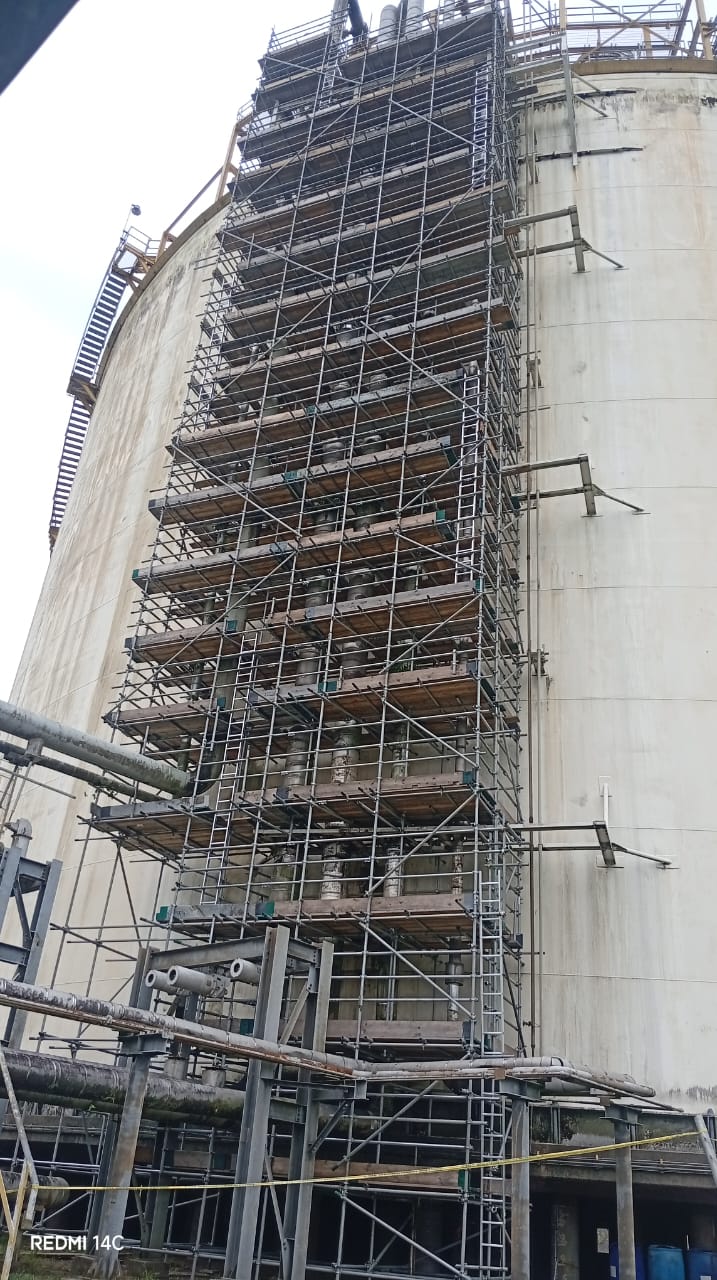
The photographs in this post come from EasyKrest's active operations across industrial and commercial sites. Image 1 shows a full-height scaffold erected against a large industrial storage tank, with multiple working platforms at different elevations, properly boarded out and braced against the tank structure. That scaffold exists because maintenance or inspection work needs to be carried out at height on that tank, in an environment where safety standards are non-negotiable.
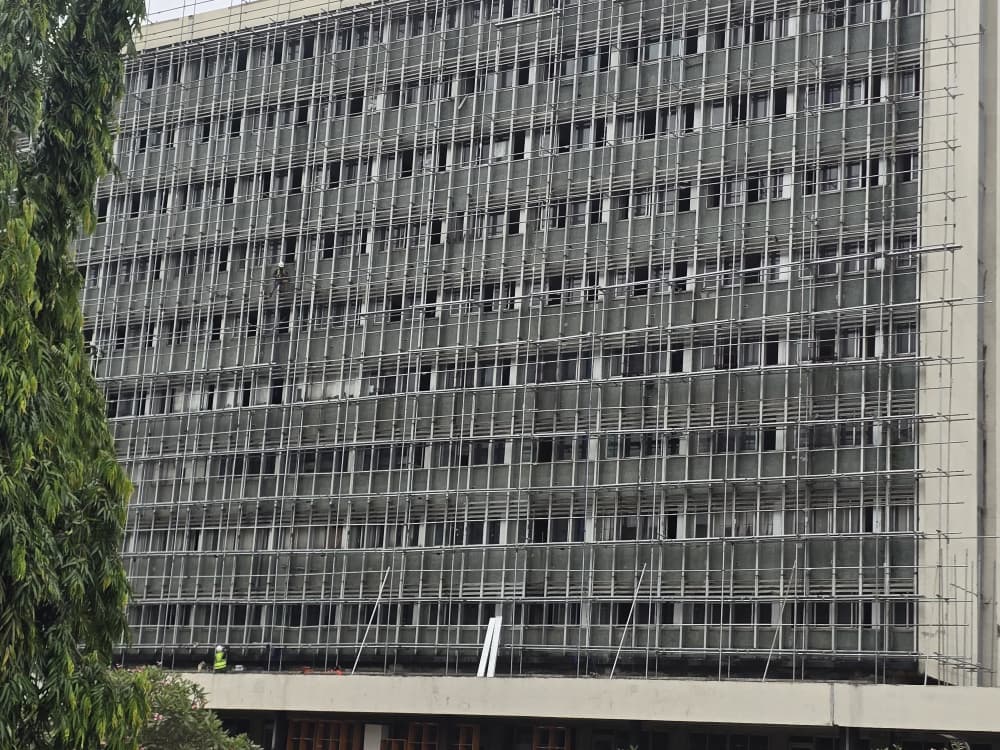
Image 2 shows a scaffold system covering the full facade of a multi-storey building, every bay and level consistent, properly tied to the building structure at regular intervals, with working platforms accessible at each floor level. The precision of that installation is not an accident. It is the product of a team that knows exactly what they are doing.
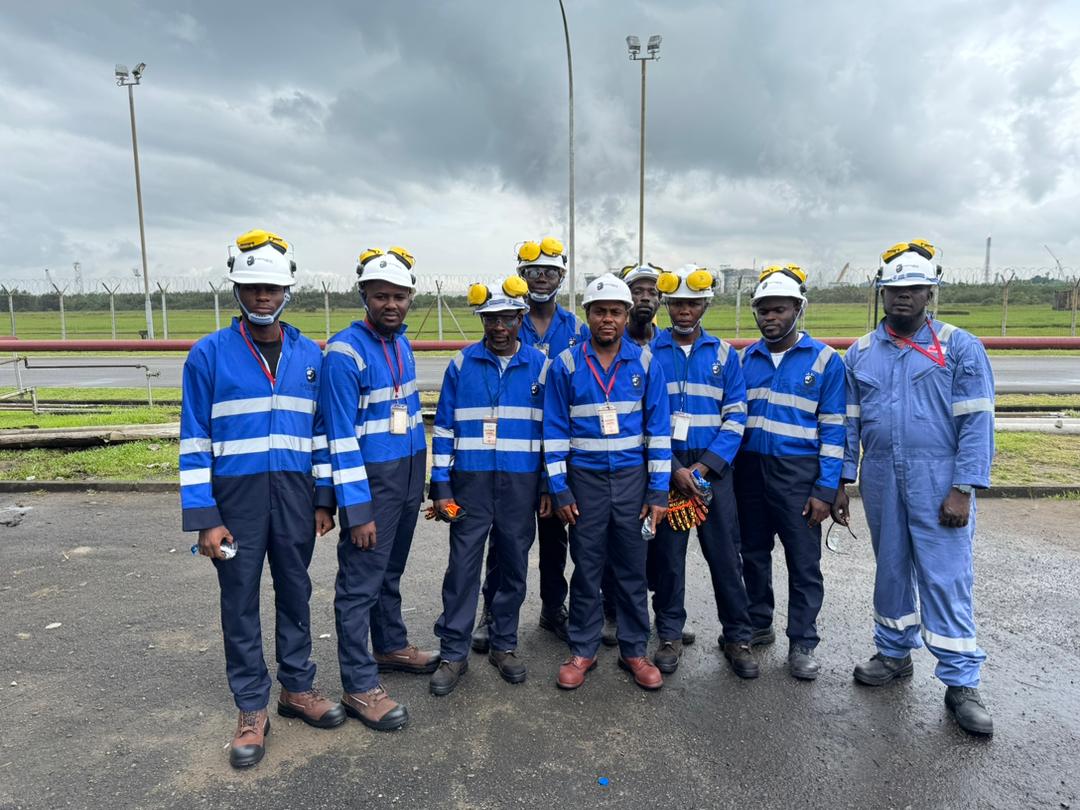
The EasyKrest scaffolding teams in Images 3 through 6 are the people behind that work. They are deployed on projects that demand the highest HSE standards, operating on sites where access controls are strict, where every worker must be badged and inducted before entry, and where the quality of the temporary works is scrutinised as closely as the permanent works.
These are not casual labourers. They are trained, inducted, PPE-equipped scaffolding professionals who understand that the platforms they build will be used by their colleagues. That responsibility shapes how they work.
The Three Stages Where Qualified Scaffolders Make the Difference
Qualified scaffolding expertise matters at three distinct points in every project, and all three are equally important.
The first is design and planning. Before a single tube is placed, the scaffold configuration needs to be thought through. What are the working loads? What are the anchor points available on the existing structure? What height and reach does the work require? Are there overhead hazards, underground services, or structural limitations that affect how the scaffold can be configured? A qualified scaffolder or scaffold designer answers these questions before the work starts, not during it.
The second is erection. The scaffold must be built exactly as planned, with all components properly fitted, all connections properly made, all ties properly installed, and all working platforms properly boarded and equipped with edge protection. This is where the physical skill of the scaffolder is most visible, but it is also where corners are most commonly cut when unqualified labour is used. A standard scaffold configuration can look right to an untrained eye while having multiple defects that compromise its structural behaviour under load.
The third is inspection. A scaffold that is properly erected on day one can be in a compromised state by day ten if site activities have damaged components, if weather has shifted the ground beneath base plates, if other trades have removed ties for access without replacing them, or if materials have been stored on platforms at loads they were not designed to carry. Regular inspection by a qualified person is not optional on a professional site. It is a requirement, and it is what separates a scaffold management system from a scaffold installation that was forgotten after it went up.
Scaffolding on Oil and Gas Sites: No Room for Error
The photographs from Images 3 to 6 were taken on what is clearly a high-security industrial site, almost certainly an oil and gas facility. The access controls, the site infrastructure visible in the background, and the level of PPE the EasyKrest team is equipped with all point to a site operating under strict HSE protocols.
On oil and gas sites, scaffolding carries an additional dimension of risk that does not exist on ordinary construction projects. Many of these environments contain flammable or explosive atmospheres, hazardous chemicals, high-pressure pipework, and electrical systems that create hazards for any work happening nearby. A scaffold failure on an oil and gas site does not just risk the workers on the scaffold. Depending on where and how the failure occurs, it can trigger cascading consequences that affect the entire facility.
This is why oil and gas operators require their contractors to demonstrate scaffolding competence before they are allowed to erect temporary works on site. Scaffold supervisors must hold recognised qualifications. Scaffold erection must follow approved procedures. Scaffold inspections must be documented. And scaffolds must be tagged with clear status indicators showing whether they have been inspected, are fit for use, or are out of service.
EasyKrest meets these requirements on every oil and gas project we work on. Our scaffolding teams are trained, our procedures are documented, and our standards do not change based on who is watching.
The Human Side of Scaffolding
There is something worth saying about the people in these photographs that goes beyond their technical competence.
These men showed up to a difficult, physically demanding job on a rain-grey morning, in full PPE, ready to climb structures and build platforms that their colleagues would trust with their lives. They are not the people whose names appear on project contracts or board presentations. They are the people whose hands actually build the things that make this company's work possible.
In an industry that talks a lot about HSE culture, scaffolders are the people who make that culture tangible. Every properly installed base plate, every correctly fitted transom, every tie properly connected to the structure, every working platform properly boarded out to the edge, is a small act of care for the person who will stand on it tomorrow. Multiplied across hundreds of platforms on dozens of projects, those small acts of care amount to something significant: a construction environment where people can work at height and go home safely.
EasyKrest is proud of these teams. Not just because they are technically competent, which they are. But because they take seriously the responsibility that comes with the work they do.
What Clients Should Be Asking Their Contractors
If your company is engaged in any construction, maintenance, inspection, or industrial cleaning activity that involves working at height, there are questions worth asking your scaffolding contractor before work starts.
Are your scaffolders formally trained and certified? Who designed this scaffold configuration, and what are the design load assumptions? How often will this scaffold be inspected during the project, and who will conduct those inspections? How will changes to the scaffold during the project be managed and documented? What is the procedure if a component is damaged or a tie is removed?
If a contractor cannot answer these questions clearly and confidently, that is important information. Scaffolding is not an area where the cheapest option and the safest option are usually the same thing.
EasyKrest Nigeria Limited operates with clear answers to all of these questions on every project. If you want a scaffolding contractor whose standards match the seriousness of your project, we are ready to talk.
Building From the Ground Up, One Platform at a Time
Great construction is built on invisible foundations. Not just the concrete foundations in the ground, but the temporary structures, the systems, the safety culture, and the people whose contribution makes every visible achievement possible.
Scaffolding is one of those invisible foundations. The EasyKrest scaffolding teams who appear in these photographs will not be mentioned in the project completion report. Their names will not appear on the finished structure. But the work that happened on those platforms, the welds made, the inspections conducted, the coatings applied, the repairs completed, would not have been possible without them.
That is worth saying out loud. And it is worth building a company culture around.
1 Comment
Excellent work! Safety, precision, and quality clearly reflected in the scaffolding installation.
Leave a Comment