There is something quietly powerful about a bridge.
It does not announce itself. It does not demand attention. It simply exists between two points that were once separated, and in doing so, it changes everything for the people on either side of it. Journeys that took hours now take minutes. Markets that were unreachable become accessible. Children get to school. Goods reach buyers. Families stop being isolated by geography.
That is what a bridge actually does. And it is what drives every project EasyKrest Nigeria Limited takes on when we show up to build one.
We Build in Water. That Is the Hard Part.
Anyone can build on solid, dry ground. Bridge construction over open water is a different challenge entirely, and it is one that separates serious engineering companies from the rest of the field.
When you build a bridge over a river, you are not just managing construction. You are managing tides, water depth, soft riverbed conditions, access for heavy equipment, concrete pours in environments that would rather work against you than with you, and the safety of a workforce operating in and around water every single day.
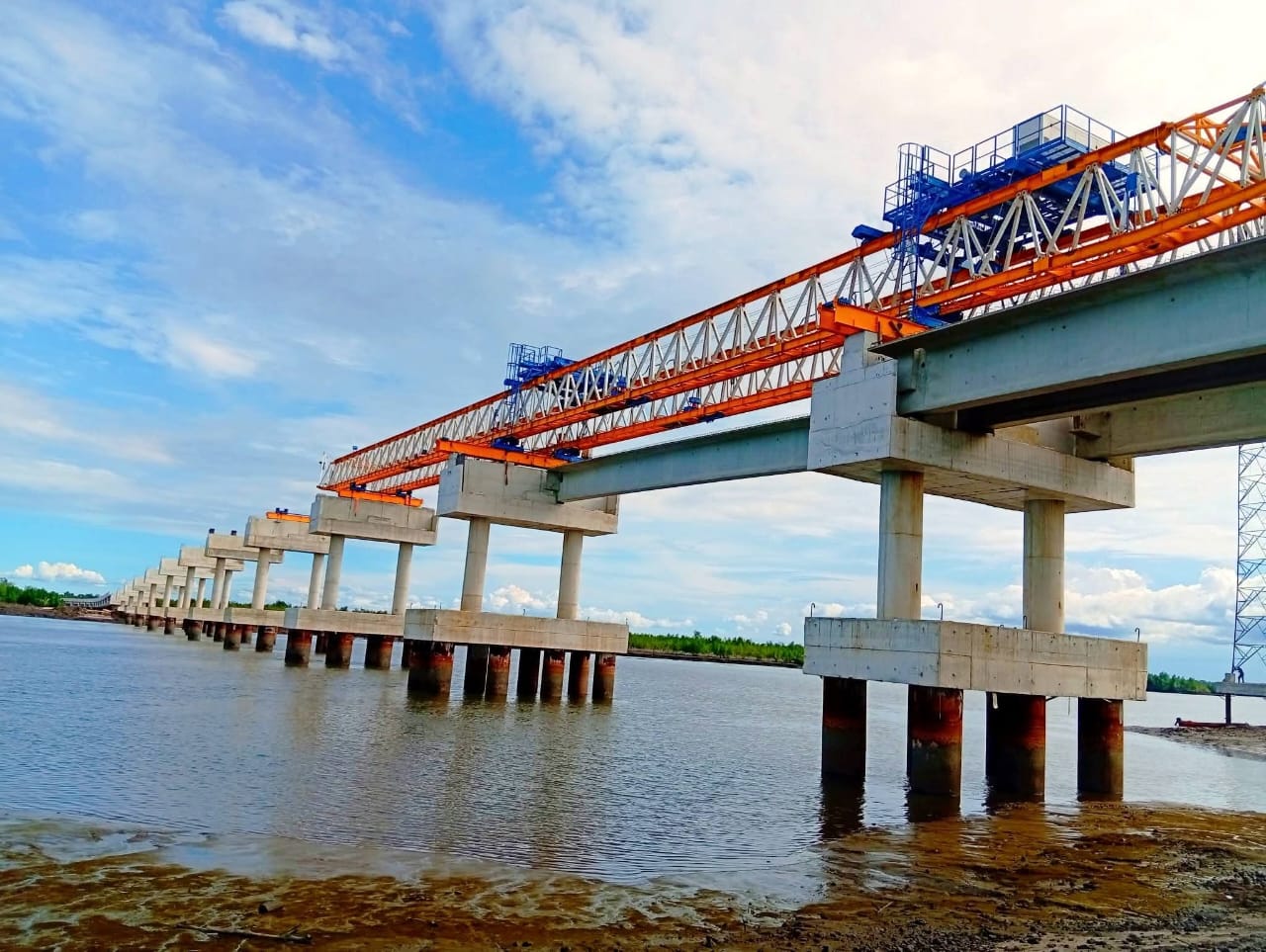
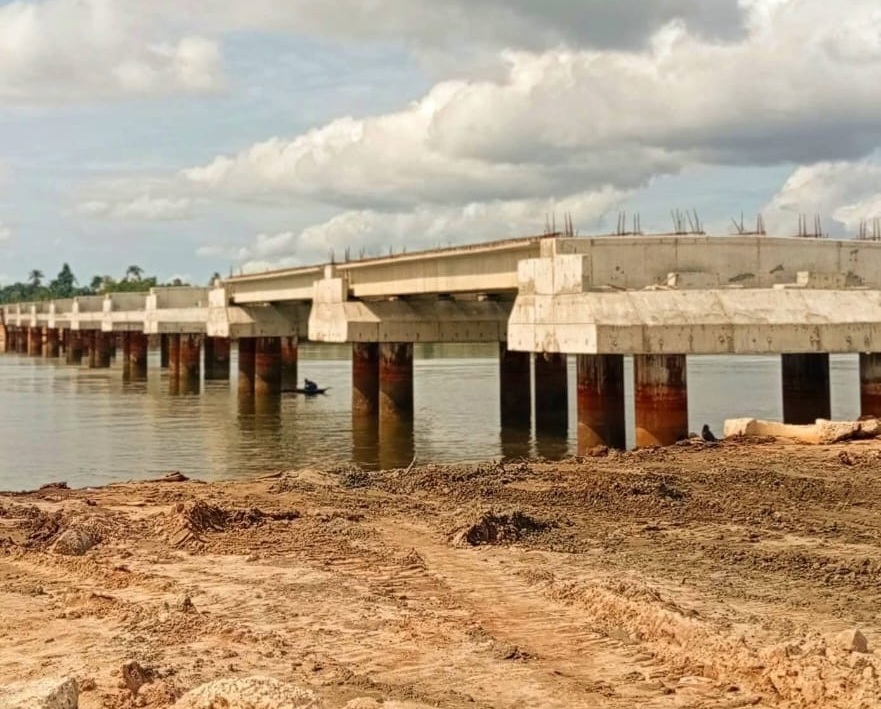
The piers in Image 1 did not grow out of that river by accident. Each one was founded in the riverbed through driven steel piles, capped with reinforced concrete, and raised to the elevation needed to carry the bridge deck above flood levels. The concrete you are looking at in those photographs was designed to survive not just the traffic loads crossing above it, but decades of exposure to water, sun, and the slow pressure that nature puts on everything humans build.
Getting that right requires engineering. Not guesswork, not improvisation, but proper structural design, quality materials, controlled concrete production, and a site team that knows what they are doing and executes with discipline every day.
The Deck: Where Engineering Becomes Infrastructure
Most people think of a bridge as the road on top. But by the time you are walking or driving across a bridge deck, the hardest work is already done and buried beneath your feet.
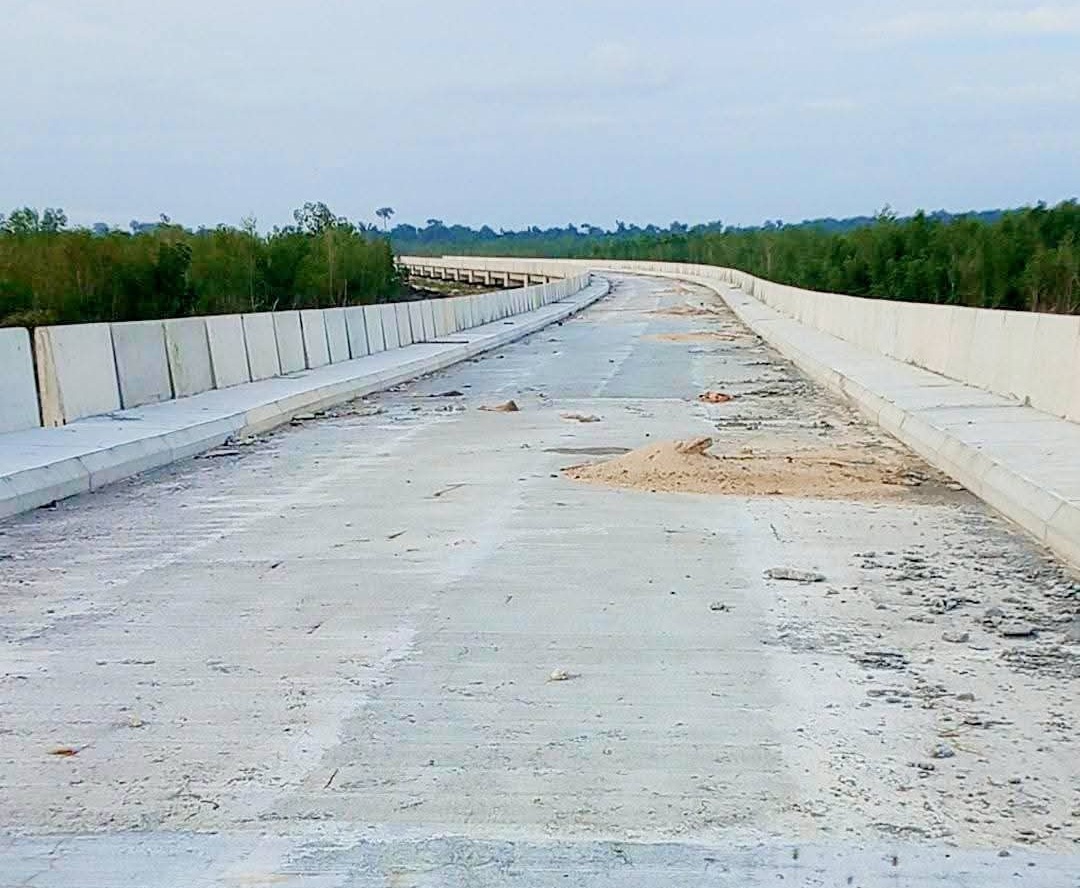
Image 2 shows the bridge deck from above, looking down the full length of the structure. What you are seeing is a wide concrete carriageway with formed concrete parapets on both sides, stretching far into the distance. It is quiet in that photograph. Still. But what it represents is hundreds of hours of formwork, reinforcement fixing, concrete placing, curing, and inspection that happened before that surface looked the way it does.
Concrete bridge decks are demanding to produce correctly. The surface must be even and well-finished. The structural depth must be consistent. Reinforcement cover must be maintained so that the steel inside is protected from corrosion for the life of the structure. Construction joints between deck pours must be designed and executed carefully so they do not become weak points under traffic loading.
EasyKrest does not treat any of this as optional. It is the work. And we do it to the standard the structure deserves.
That Orange Frame Is Not Decoration
If Image 3 caught your eye, you are probably wondering what the large orange and blue steel structure mounted above the bridge is. That is a launching gantry, and it is one of the most interesting pieces of equipment in bridge construction.
A launching gantry is used to construct bridge spans progressively along the alignment. It sits on top of already-completed piers, carries the formwork or lifts precast elements for the next span, and then moves itself forward once that span is complete. The process repeats, span by span, until the full bridge length is done.
Using a launching gantry properly requires careful engineering planning. The gantry is itself a large structure carrying significant loads, and it must be properly supported at all times. The sequencing of operations has to be worked out in advance, concrete strengths at each stage must be verified before loads are applied, and the movement of the gantry along the bridge must be coordinated safely with all other site activities.
The fact that EasyKrest is deploying a launching gantry on this project is not something we mention casually. It represents a level of technical investment and operational capability that is not common among Nigerian civil contractors. We are not building bridges the same way they were built twenty years ago. We are using the right equipment, the right methods, and the right people to build them the right way.
What Makes a Bridge Last
Nigeria has bridges that were built decades ago and are still standing strong. It also has bridges that failed long before they should have, structures that crumbled, cracked, or became unsafe within years of opening because corners were cut somewhere in the process.
The difference between a bridge that lasts and one that does not is almost never a mystery. It comes down to the quality of the design, the quality of the materials, the quality of the workmanship, and the integrity of the people responsible for delivering all three. When any one of those fails, the bridge pays for it eventually, and so do the communities depending on it.
At EasyKrest, we think about the community on the other side of every bridge we build. The trader who will use it to bring goods to market. The family whose children will cross it to reach school every morning. The emergency vehicle that will need it to reach someone in crisis. Those people deserve a bridge that will still be there in thirty years, solid and safe and exactly as it was designed to be.
That is the standard we hold ourselves to. Not because someone is checking. Because it is the right way to build.
Nigerian Engineers Building Nigerian Infrastructure
There is a narrative in this country that serious infrastructure projects must be handed to foreign companies to be done properly. EasyKrest Nigeria Limited exists to challenge that narrative, not with words, but with completed structures that speak for themselves.
The bridges in these photographs were designed with engineering discipline, built by Nigerian hands, managed by Nigerian professionals, and funded through the same determination that drives every serious indigenous company in this country. They are proof that the capability to deliver world-class civil and marine engineering exists in Nigeria, is growing in Nigeria, and does not need to be imported.
Every span we complete is a data point in that argument. Every pier rising from a Nigerian river, every deck stretching across a Nigerian waterway, every community connected by an EasyKrest structure is evidence of what Nigerian engineering can produce when it is given the space, the resources, and the standards to do so.
We are proud of that. We intend to keep building on it.
The River Is Just the Beginning
If you are a government agency, a development bank, an oil and gas operator, or any organisation with a bridge, jetty, or marine civil works requirement in Nigeria, EasyKrest Nigeria Limited wants to hear from you.
We bring engineering expertise, the right equipment, a safety-first culture, and a track record of delivering structures that communities can be proud of. The river is not an obstacle to us. It is where we do our best work.
Reach out. Let us build something together that will still be standing long after both of us have moved on to the next project.
2 Comments
This is a great recommendation !!!
The infrastructure work is progressing well and remains on track
Leave a Comment